
“Say, Ana,” Lyn says. “Give me a word for ordinary.”
“Why?”
“Just do it.”
We are tucked under our seatbelts, en route to Williams, Pennsylvania. My feet graze the floor; Lyn’s feet do not. She is shorter than me and likes to fog the car glass with her breath. She thinks it is unique and distinctive and idiosyncratic.
“Normal,”
“But everyone knows normal.”
“Pedestrian?”
Lyn hums. Her cheek is turned like a brown half-moon. Mom would poke it and laugh warmly, her lips open like a fat balloon, but Mom isn’t here. Instead, we are driving to Williams, Pennsylvania with nothing but rusted luggage, two inflatable mattresses, and a sedan the color of my faded jeans.
“I like pedestrian. I’m going to use it.”
“Then write it down,” I suggest.
“No need,” Lyn tells me. She uses her chipped fingernail to trace a snowman on the window. “I have it safely secured.”
Lyn is a collector of words. She has the words “ineluctable,” “telegenic,” and “canoodle,” and she is always begging for more, for the book she wants to write. She is a small girl with arms the color of almonds and short, tangled hair a little longer than her chin. We are sort-of sisters. Sort-of because we are the same age, but with different mothers. Because she is from a province in the Philippines and I am Filipino-American and from New Jersey.
Dad tells me that we are borrowing Lyn from her mom, as if she were a novel. “We have to take good care of her,” he says, urgently, but when I ask about her return, he never answers. It makes me think that Lyn is going to stay with us, but you would never know, just looking at Lyn. She has high cheekbones and a wide, gummy smile. She is always smiling.
Tonight we sleep on our backs, underneath a flickering ceiling fan. Lyn’s arm curves under her pillow, her shirt rising so I can see the milky indentations of her bones. “The mattress is so precarious,” Lynn tells me, giggling, so small but so alive, and I laugh with her. “Is that your word of the day?” I say.
Lyn perks. “Maybe. But it’s not long enough. You already know what precarious means.” “So? My vocabulary is pretty good.”
“You don’t know the word parlous,” Lyn points out, except her pronunciation is so terrible that I end up laughing, anyway. It is always like that with Lyn. Me laughing, her smiling, our dirty pillows wedged between us. Long, rambling sentences with lumpy syllables and soupy punctuation. “I like it when you don’t understand what I’m saying,” Lyn says, afterwards.
“Why?”
“It makes me feel more American.”
“But you’re the most American person I know,” I tell her, and she smiles, faintly, her cheeks turned white under the ceiling light.
Lyn first came to us in an old red American truck, her body sleepy over her dirty suitcase. Then, she didn’t know any English. Then, she only spoke to Dad. I never really understood what they were saying, only the small fragments that I knew from childhood. Tubig, meaning water. Nanay, meaning Mom. Lyn talked about nay a lot, before she devoted her words to English. And then all the talking ceased.
“What should I write about today?” Lyn asks me. It is almost the end of summer, and our hair hangs untied against our sun-burned shoulders. Look, Lyn had told me, pointing to a freckle. Now I’m really like an American girl.
I think about it carefully. “You should write about an alien.”
“Like an alien from Mars?”
“Sure. But you could make the alien evil, or something.”
Lyn is horrified. “Why would I want to do that?”
I laugh. “To make it more interesting. Like us. We’re kind of like aliens, in Pennsylvania.” “But we’re not evil,” Lyn says. “We’re kind. And besides, it can be interesting without that. If I write the best words. If I express it well.”
“But making it evil would be so fun,” I say.
“No, no.” Lyn is staunch, and her upper lip is sweaty. “An alien can be interesting in other ways. I’ll make it interesting, with my words.”
Before, I thought that Lyn only believed in words and sentences. Her god was English. She wanted her sentences to be like snakes, sinewy, effortless, and precise. She wanted to make America smile with her words.
But when Lyn wakes up in the morning at four am, her face is soft and teary, and her lips shift into a prayer for another God. She prays to Jesus and Mary and all the saints until the sun rises. Then her voice drops into a naked whisper, and she prays for her sisters and brothers in the Philippines. For her nanay. She prays for nay last, when she thinks we cannot hear her. With all of her elaborate English words, she prays.
“Let me see it, Lyn,” I say. “Let me see your story.”
Lyn giggles and hides her fingers behind her back. “Guess my word of the day first.” Dad is driving us to our new school with the radio at full volume, because Lyn wants to listen to more commercials and guess the radio question games. She likes to listen to the radio hosts talk–something about the way they enunciate their vowels is extraordinary, she says. “You’re both extraordinary,” Dad replies. Lyn’s eyes grow rolled and buttery. We are early, and it is too warm to draw, so we settle for our hands; Lyn spreads her palm wide and waits as I trace letters carefully onto the creases on her skin. E, X, C, E, P, T, I, O, N, A, L, I write, watching her lips become a tiny crescent.
“Guess again.”
E, X, T, R, A, V, A, G, A, N, T, I try.
“Closer.”
E, X, T, R, A, O, R, D, I, N, A, R, Y, I trace, finally. “Like your story will be, when I read it.” Lyn shakes her head. “There are too many problems with it,” she says. “The words are all wrong. It’s not good enough.”
“Dad and I will like it. We always like your words.”
“Really,” Lyn says. Her voice is warm and lopsided. “Do you really think so, Ana?” “It will be extraordinary, Lyn,” I say. I teach her how to pinky promise–the smooth interlocking of stubby fingers–and when she tilts her head and smiles, I shake.
Dad pushes Lyn into his bedroom when it is dark outside. His back is a hunched, empty curve, and I know he has been crying; he pulls back a whisper of hair to say something in Lyn’s ear. All at once Lyn’s radiant smile drips and puddles onto the floor, and her eyes become glassy and breakable.
“Nay,” Lyn breathes, like an infant. “Where is nay?”
Dad only bends his head, a movement swift and ruthlessly permanent, and then Lyn cries out again. I press my body into my pillow and think of Lyn’s gentle, teary, broken prayers. Lyn is on the mattress, crying for her nanay, and I find myself in her.
In this moment, we have no words, only the warmth from our skin and clothes. Only weak phrases to hide behind, our bodies soft and folded.
I hug Lyn, crying in Tagalog, in her native tongue, and I wish I could understand her pain. But I do not. I close my arms around Lyn and hope that my thoughts can bleed through my arms the way my words cannot.
Lyn’s legacy culminates in an epitaph. It is short, the way she wanted it, and young. “I was supposed to give nay my story. The one with all the right words,” Lyn says. “But she always loved the simplest words the most.”
“I think she just loved you,” I say, and Lyn ruminates, crossing one bony arm over the other. She is a collector of words, and she leaves them here, unspoken, between me and her nanay. And that is enough.

Cathleen Balid is a writer from Queens, New York. Her work is published or forthcoming in the Roanoke Review, Querencia Press, Surging Tide Magazine, and more. When she is not writing, she can be found journaling or fueling her oolong tea obsession.
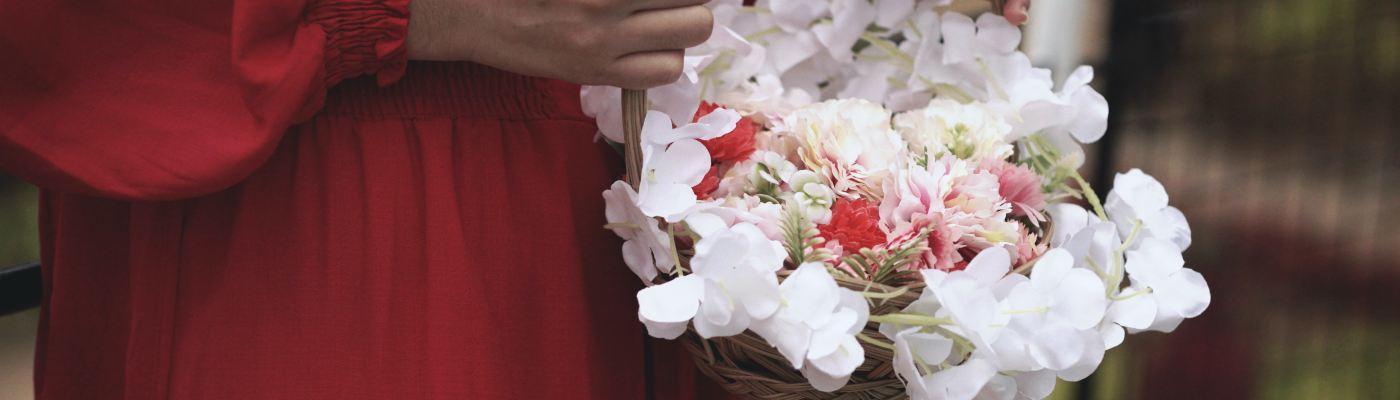
Featured Photo by RJ Trazona on Unsplash
 Sentience Literary Journal